
How to Beat the Public Speaking Yips: A Simple Guide
Imagine standing up in a meeting, ready to share your ideas, but your mind goes blank. You stumble over your words, your hands shake, and all you want is to escape. This sudden loss of speaking ability from anxiety and overthinking is called the public speaking yips. If you’re a student or in your career, you’ve probably felt it at least once during a group introduction or presentation.
Here’s a Reddit post describing the public speaking yips:
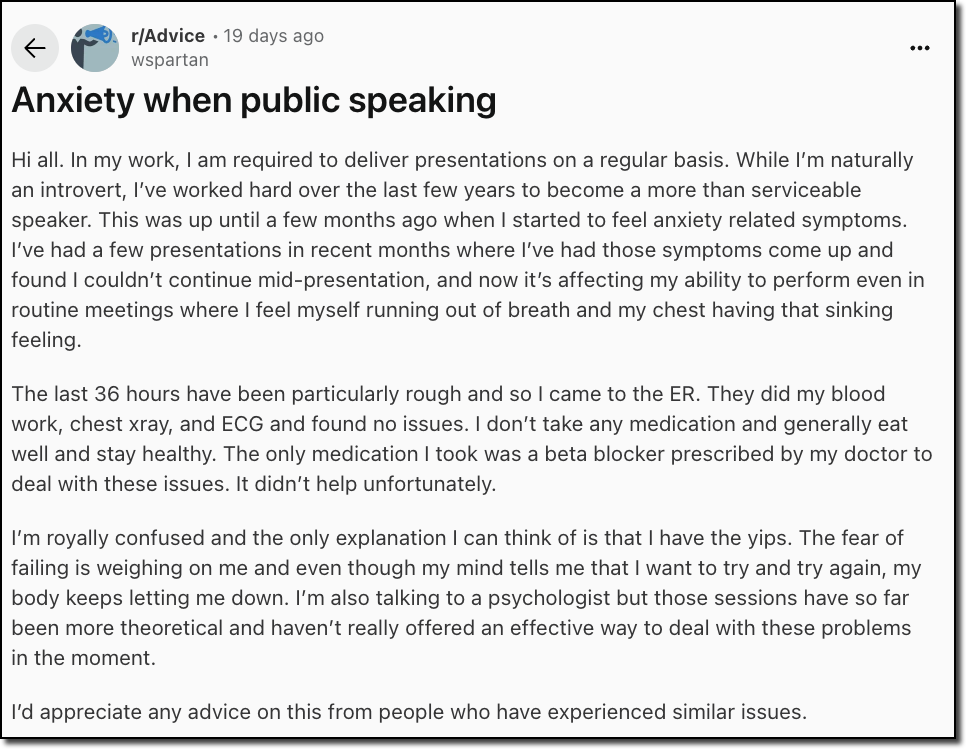
The public speaking yips can chip away at your confidence and slow down your career growth. It often pops up without warning, leaving you second-guessing your skills or even avoiding speaking up altogether. You might notice your heart racing or your thoughts racing faster. Sometimes, your voice feels shaky or your brain seems to freeze just as the spotlight hits.
This article breaks down why the public speaking yips happen, what signs to watch for, and how to get past it. I’ll share real reasons it affects so many smart, capable people. You’ll also learn different ways to fight through the nerves so you can speak up with more confidence next time. For those looking for extra support, I’ll introduce the SpeakCalmHQ program, made just for people dealing with these issues.
It’s normal to feel some nerves, but you don’t have to stay stuck with public speaking yips. If anxiety is a big part of your struggle, check out this helpful lesson
“The 3 Layers of Fear” in the Free Mini Training Course. Let’s untangle what’s really behind these nerves and help you take the next step forward in your career.
What Exactly Are the Public Speaking Yips?
The public speaking yips happen when your mind blanks and your voice falters during a talk, even though you know what you want to say. You get an automatic and uncontrollable fear response with intense symptoms (rapid heart rate, sweating, breathlessness, mind blank, blushing, etc.) and it makes speaking difficult or impossible. It is an involuntary mental block triggered by psychological stress, not a lack of skill. You might freeze up in meetings, stumble over simple words, or lose your place even after plenty of practice. The feeling is common among professionals facing presentations or high-pressure moments at work. The yips can turn a routine meeting or group introductions into an anxious ordeal, leaving you confused and frustrated. You also feel shame like “What’s wrong with me? I should be able to do this. Why can other’s do this easily but I can’t.” The shame cycle is brutal—it widdles away at your self-confidence in all aspects of your life.
Experts in Social Anxiety Disorder (SAD), and public speaking anxiety (which is a type of social anxiety), describe this as a form of performance anxiety where self-consciousness and fear of judgment suddenly disrupt your usual abilities. You have the knowledge and preparation, but something in your brain just hits pause. Many successful and experienced people experience this, so you are definitely not alone (SpeakCalmHQ estimates about 12% of the population, see population who is “Very Afraid”). The public speaking yips are especially likely to show up when there is higher than usual stress in your life (due to a change like a new job, a move, divorce, marriage, new baby) and when a lot is at stake and you place added pressure on yourself.
If you are looking for an in-depth explanation of speaking fears, you can learn more about speaking fears in the SpeakCalmHQ Masterclass.
How It Differs from Normal Nerves
Everyone feels butterflies in their stomach before a big moment, but the public speaking yips go a step further. While normal nerves might cause shaky hands or a faster heartbeat, the yips can make your mind go completely blank or your voice refuses to work. Think of it like a professional golfer suddenly struggling to hit a simple putt, despite years of practice. In sports, this is called the yips, and it is rooted in overthinking and intense focus on your movement, rather than letting your skills flow naturally.

Here’s a good podcast that explains the yips in sports.
The yips build from normal nerves into something bigger—a total freeze-up. Psychologically, it comes from suddenly becoming hyperaware of yourself and the audience. Instead of speaking on autopilot, your thoughts trip you up, and this self-awareness hijacks your natural ability to communicate. Regular nerves fade as you warm up, but the yips hold you hostage in that frozen state until the moment passes.
You can think of it this way:
- Normal nerves: You feel uneasy, but can keep moving forward.
- The yips: You feel stuck, unable to speak or think clearly.
Knowing the difference is important. The yips are not a flaw in your skill—they are a temporary disruption, often sparked by the pressure of wanting to do well in front of others. Recognizing the yips for what they are is the first step to moving past them.
The Psychological Causes Behind the Yips
The public speaking yips don’t just appear out of nowhere. They build up from real psychological triggers that can trip anyone, even the most skilled, into a mental corner. Many individuals start strong, but when pressure rises, certain mental habits make speaking feel impossible. Here’s a closer look at what’s happening beneath the surface when the yips take hold.
Role of Self-Consciousness and Overthinking
Self-consciousness acts like a spotlight shining on every flaw, mistake, or awkward pause. When you step up to speak, you can feel as if everyone is watching your every move. This sudden self-awareness can make even the most confident person freeze. You start to overthink each word, you focus on how you’re coming across to others, and micromanage and second guess everything you’re doing. Instead of trusting your self, you fall into a loop of self-doubt.
Overthinking keeps you trapped in your own head. Instead of letting your thoughts flow, you second-guess your next line. Your brain is too busy scanning for mistakes to express your ideas clearly. We call this cognitive overload. The speaking task is challenging enough, but you’re asking your brain to also scan your body for symptoms, continually evaluating yourself for how you’re coming across to others. Your brain can’t handle all of those tasks when you’re trying to get your key point across. No wonder your mind blanks. Studies on social anxiety disorder and glossophobia show that this inner focus can make symptoms worse, like shaky hands, dry mouth, and a faltering voice.
Early signs of this mental spiral are:
- Feeling tense or stiff as you prepare to speak
- Replaying what could go wrong over and over
- Getting stuck on how you sound instead of the message
If you spot these patterns, pause and redirect attention outside yourself. It helps to focus on your topic or try grounding techniques (like noticing three things in the room) before you speak. Catching yourself early stops the spiral of self-doubt before it steals your words. This is difficult to do in a real-life situation. That’s why Practice Clubs that specifically focus on the yips are gold. They give you space to practice pausing and redirecting your attention. And you’re in a supportive community with others who have the yips. So you can talk about the yips openly and get honest and accurate feedback. Researchers tell us that individuals with the yips are not giving themselves accurate feedback and this keeps the yips cycle alive. Once individuals begin getting accurate feedback in supportive groups, it changes the cycle and outcomes.
Dr. Cheryl Mathews from SpeakCalmHQ says “Safe practice clubs that focus on gradual desensitization and key mindset shifts are critical to overcome the yips. They make a huge difference. You can’t get over the yips by talking about it. You have to get strategic exposures that are manageable for you, in a safe controlled environment, and work on building a new database of positive speaking memories.”
Performance Anxiety in High-Pressure Situations
Put someone on the spot, like in a job interview or when leading a client presentation, and the stakes feel sky-high. Performance anxiety sets in, hijacking your focus. Your heart races, your thoughts start echoing, and your usual speaking rhythm breaks down. This anxiety is your body’s natural stress response, but it’s triggered by fear of judgment, embarrassment, or letting others down. That’s how it starts. What keeps it alive is a fear of the fear. The key to getting over the yips is to address the fear of the fear (the fear of experiencing the yips again).
Cognitive behavioral research finds that when you expect criticism or negative reactions, your anxiety spikes and performance drops. Think about those moments you have to speak up with no time to prepare—maybe you’re asked for your opinion in a meeting. Suddenly, your mind tries to shield you from mistakes, but ends up making you freeze up instead.
If this sounds familiar, it’s helpful to find others who have experienced the public speaking yips. The SpeakCalmHQ community gets it. Many find help by learning to reframe these moments and by practicing small exposures to stressful speaking situations. For deeper guidance, you can always join SpeakCalmHQ Practice Clubs where you can be embraced in a like-minded community and do manageable exposures and gradual desensitization. There are other programs that specialize in the public speaking yips such as these Anxiety Treatment Centers. You’ll have to check their websites to see if they have a public speaking phobia program. You can also check ZenSpeak in New York City and Stagefright Survival School in Washington DC. Do some research, compare programs and find the best fit for you.
Signs and Symptoms of the Public Speaking Yips
Spotting the public speaking yips early can save you from a long spiral of self-doubt. Many individuals think they are alone in this, but there are approximately 41 million in the US alone (~12% of the population). These symptoms can feel like your body and mind are betraying you at the very moment you want to sound your best. Let’s break down what to watch for, so you can start to regain control.
Common Indicators
The yips show up in some clear ways that go beyond mild nerves. If you’ve felt more than one of these, you are not imagining it. Here are the signs many people experience:
- Sudden word loss: You blank out or lose your train of thought mid-sentence, even when you had rehearsed.
- Racing thoughts: Your ideas pile up faster than you can speak, making it hard to get any words out.
- Physical tension: Your hands might shake, your voice may quiver, or your chest can tighten with stress.
- Avoidance of speaking opportunities: You look for reasons to skip meetings or decline public speaking roles.
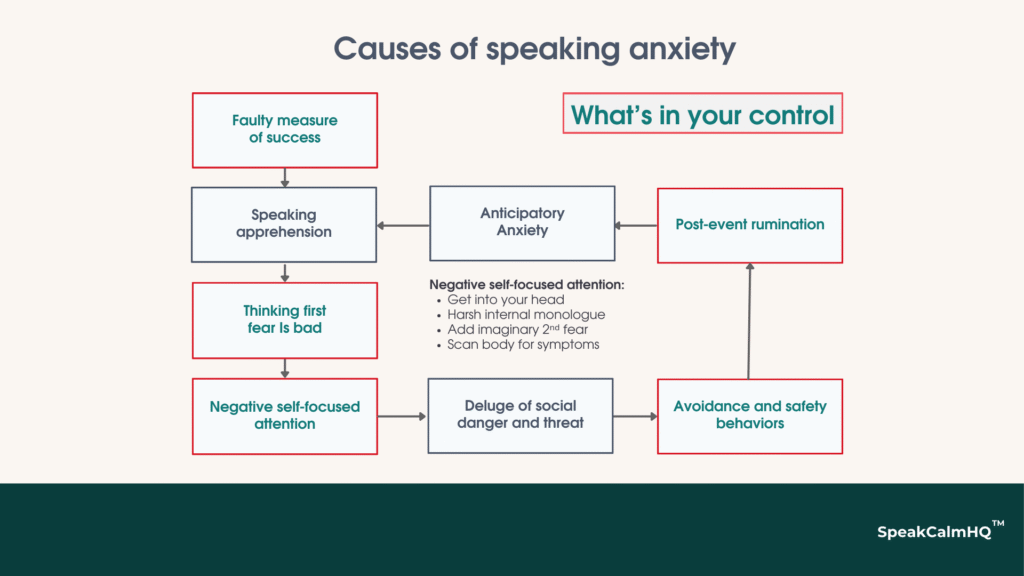
- Post-event rumination: After your talk, you can’t stop replaying every mistake or feeling embarrassed about how you sounded.
- Anticipatory anxiety: You worry for weeks or months before the speaking event. This robs you of sleep, joy and relaxation. Members of the SpeakCalmHQ program with the yips say they can’t relax and enjoy their evenings or weekends before a speaking event. It’s painful.
These symptoms build on each other, making each speaking event feel harder than the last. The more often you feel stuck, the more likely you are to avoid speaking up altogether. And avoidance is your anxiety’s best friend. The more you avoid, the more you’re pouring fuel on the fire. It’s a complex cycle and it’s cumulative. Things just get worse and worse. Then the anxiety starts to spill over into social situations and affect more and more of your life.
Emotional Toll
The yips can do more than ruin one meeting. They can chip away at your self-esteem and even make you question your own skills. You might feel embarrassed, frustrated, or ashamed for “choking” under pressure. Over time, these feelings add up, especially when you are working hard to move ahead in your career.
Missing chances to speak up can mean missing out on promotions or recognition. The cycle is tough: anxiety leads to worse performance, which leads to more anxiety. If you relate, you are not alone. Public speaking stress hurts your confidence at work.
How Anxiety Disrupts Speech
Research in psychology shows that anxiety scrambles the way your brain handles speech. High stress hijacks memory, which helps keep your thoughts clear and words flowing. When stress peaks, this part of the brain just stalls, making you trip over your words or forget what comes next.
This reaction is not a sign of weakness. It is a normal, biological response to a perceived threat. Your body fires up fight-or-flight, and your ability to focus on your message takes a back seat.
If these signs sound familiar, you can check your speaking anxiety symptoms for more clarity on your own experience. Recognizing the yips for what they are is an important step toward regaining your confidence in public speaking.
The Impact on Your Professional Life
Struggling with the public speaking yips doesn’t just feel awkward in the moment, it can quietly hold you back at work. If you avoid speaking up in meetings or shy away from presentations, opportunities can slip past without you even realizing it. Over time, this nervous freeze isn’t just about stage fright anymore, it can seep into your reputation, your confidence, and your long-term career growth. By facing these challenges early, you set yourself up to make the most of every opportunity, big or small.
Why Young Professionals Are Especially Vulnerable
Many young professionals step into the office full of energy but find themselves wrestling with pressures that make public speaking yips more likely. At entry level, there’s a stronger urge to prove yourself—to show you belong. This pressure builds up fast, especially when every meeting feels like a test.
The job market is tight and the competition can be intense. You might feel that stumbling in front of your team or manager will be remembered when promotion time comes. Add in imposter syndrome—the feeling that you don’t really deserve your spot or that someone will figure out you’re not as skilled as they think. These thoughts pile up and make every presentation feel much bigger than it is.
Imagine this: You prepare all week for a team update, your hands sweat as you sit at the table, and when your turn comes, you freeze. After the meeting, you notice that others speak up, get recognized, and receive new projects. You start second-guessing yourself and next time, you shy away from raising your hand. This cycle is common for young professionals in their first or second job.
Here are a few everyday triggers:
- Being asked to present without much notice.
- Presenting new ideas in front of more experienced coworkers or executives.
- Worrying that a slip-up will hurt your reputation.
These moments are where public speaking yips like to show up the most, but they’re also the times when you can build confidence that lasts.
Career Consequences of Untreated Public Speaking Yips
When public speaking yips go unaddressed, the damage builds over time. The biggest cost is missed opportunities. If you seldom speak in meetings, your name doesn’t come up for key projects or promotions. Colleagues who find their voice—no matter how shaky at first—get more face time with managers and build stronger networks. A exponential salary increase happened to someone in the SpeakCalmHQ program once they overcame the yips.
Reduced visibility often means hard work goes unnoticed. Even when your work stands out, being quiet at the table can mean people forget who did the work. Managers may pass you over for future leadership roles. Networking gets tougher too, since breaking the ice in new groups often starts with just one confident introduction.
Confidence also takes a hit. After a few tough experiences, it’s easy to think public speaking just isn’t your thing. This self-doubt can creep into other areas, making you less likely to volunteer for group work, attend networking events, or even take risks that would show your true strengths.
100% of SpeakCalmHQ participants say avoiding public speaking stalled their career progress. We hear this sentiment every day, “I missed out on promotions and lead roles because I froze in front of an executive team. Even months later, I was nervous about taking new chances.”
These setbacks create a long shadow. If left alone, the yips don’t just fade away. Instead, the avoidance grows stronger and the pattern repeats. That’s why it’s smart to tackle this early, before it shapes your career path in ways you never intended.
The Yips are caused by this cycle. You have to change the things under your control to break the cycle. See the diagram below.
Practical Strategies to Overcome the Public Speaking Yips
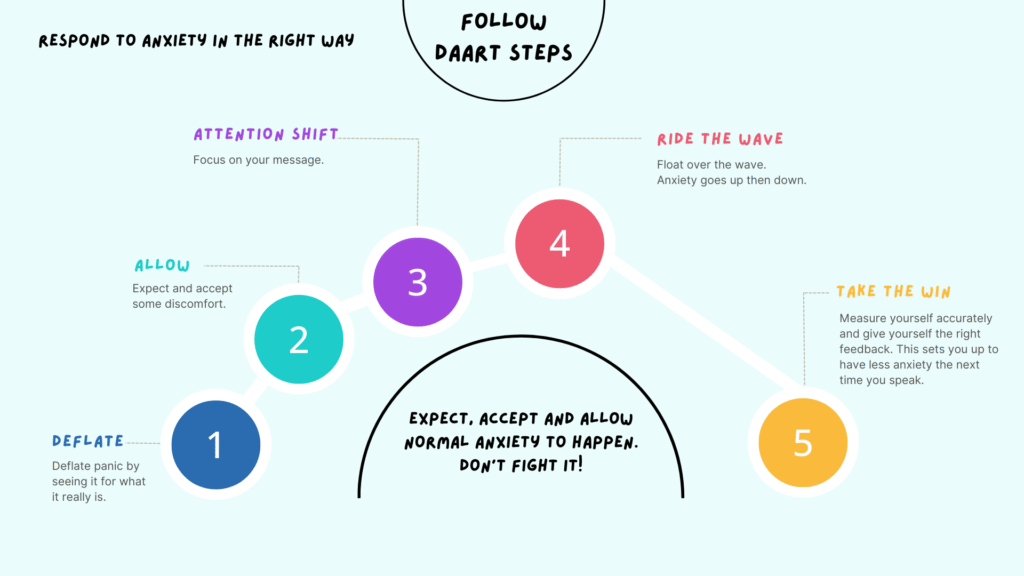
Getting stuck with the public speaking yips can feel frustrating, but you are not powerless. There are many ways to retrain your mind and body for those tough moments in front of a crowd or team. The goal is not to erase all nerves, but to move through them so you can speak clearly and confidently. Start with simple daily habits and know you’re building muscles that pay off for years.
The HEART steps are key. See diagram below.
Building Confidence Through Preparation and Practice
Confidence in public speaking comes from small, repeatable actions. If you’re battling the yips, join safe practice groups where you can rewire that automatic fear response. Also use a set routine before every meeting or presentation.
- Script your main points: Write out the key ideas you want to cover, not every word, but enough to stay on track. Use bullet points or notecards. Carry a copy with you to ease fears of blanking out.
- Practice in low-pressure settings: Rehearse in front of a mirror, with friends, or record yourself on your phone. The more you face small nerves where it’s safe to stumble, the less power the yips have. You can record yourself and put yourself “out there” in the SpeakCalmHQ forum community (part of the Practice Club program). This is valuable desensitization that you can do on your own time.
- Positive visualization: Morning or evening, close your eyes and picture yourself speaking with calm and control. Picture the room nodding along or clapping at the end. Even three minutes a day turns this from wishful thinking into muscle memory. Download the Visualization and Hypnosis audios and go on a guided journey.
- Gradual exposure: Start by joining safe practice groups – think of it like building confidence in the “shallow end of the pool.” Work up to volunteering for routine or short speaking tasks at work. Reading a meeting agenda or sharing quick updates builds positive memories. This rewires the automatic and intense fear response.
- Breathing exercises: Practice 4-7-8 breathing before and during anxious moments (breathe in for four seconds, hold for 7, out for 8). The key is to exhale longer than you inhale. This slows your heart rate and relaxes tense muscles.
- Daily mindfulness: Spend 2-5 minutes noticing your breath or the sounds around you without judgment. Mindfulness curbs runaway thoughts and helps you focus on the present moment, making it easier to speak clearly.
Here’s a simple step-by-step for reframing negative thoughts, one of the fastest ways to disrupt the yips:
- Notice the discouraging thought (“I’ll freeze up like last time.”).
- Pause and gently challenge it (“Last time I stumbled, but I kept going.”).
- Replace it with a positive reframe (“I will prepare, and even if I get stuck, I can recover.”).
Building these steps into your daily life adds up. Over time, you shift from fearing public speaking to facing it with steady nerves.
When to Seek Professional Support
Sometimes, the yips stick around despite your best efforts. If you avoid speaking, feel dread weeks before a talk, or notice the anxiety affecting your sleep or mood, it may be time for more help.
If you feel stuck despite self-help, consider reaching out to a therapist or specialized program. You don’t have to face this alone. For a supportive program designed for people just like you, check out the free mini training as a first step. Taking the step to ask for help often marks the real turning point in your growth as a speaker.
Seeking support is a sign of strength. Therapy, especially cognitive behavioral therapy (CBT), gives you practical tools to spot anxious thought loops and replace them with calmer responses. CBT isn’t magic, but it teaches you how to recognize triggers, reshape self-talk, and break the spiral of avoidance.
Here’s how to find a CBT therapist who specializes in anxiety.
Here’s how to combine therapy with exposures (YouTube video).
Programs like SpeakCalmHQ offer group coaching or one-on-one coaching designed for individuals with public speaking yips. These tools dig into the psychology of performance anxiety and help you practice real-world speaking with expert feedback.
Conclusion
Beating the public speaking yips is not about being perfect, but about taking steady steps to grow your confidence. Most individuals experience shaky hands, blank minds, or racing thoughts at some point. By understanding what triggers these moments and shifting your focus to building a new database of positive speaking memories through gradual desensization and mindset shifts, you slowly build a new story for yourself.
Using the tools from SpeakCalmHQ and practicing simple daily routines, you can move past self-doubt. Speaking up in meetings or presenting your ideas gets easier every time you try. Progress comes with practice, not overnight success. What matters most is that you keep showing up for yourself, no matter how bumpy it feels.
Pause and think about your last speaking moment. Where did you get stuck, and how could you prepare differently next time? Even one small change can make a real difference. If you want extra support or a clear starting point, start the SpeakCalmHQ free mini training.
Your opinion matters, and with the right support, you can share it with more courage and clarity. Thank you for reading and putting the effort into building your speaking skills.